
Daniel in the School of Prayer
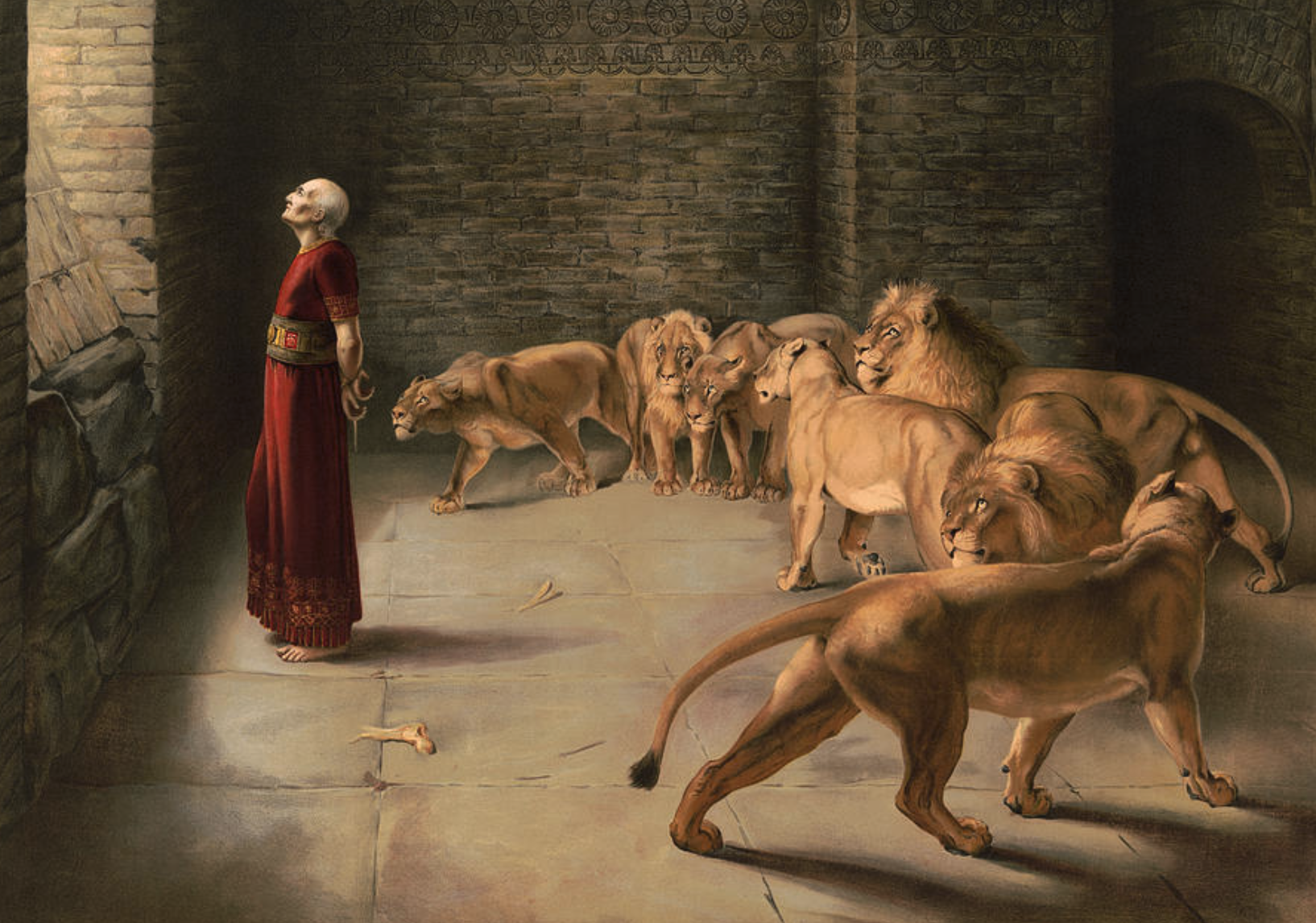
History is full of leaders whose abilities outpaced their character. For a time, their influence impressed others, but eventually, their private lives told the truth. Sadly, a moral collapse showed the foundation of their inner selves was cracked. Daniel stands as a counterexample.
If you want to know the true measure of a man, observe his prayer life. Daniel is not remembered first for his charisma or creativity. Rather, Daniel is remembered as a man of prayer. An edict had been signed that forbade anyone in Darius’ kingdom to pray except to him alone. Daniel has to choose between the law of his land or God. In a moment of intense pressure, Scripture invites us to watch him pray.
In Daniel 6:10, we are given a window into his prayer life:
When Daniel knew that the document had been signed, he went to his house where he had windows in his upper chamber open toward Jerusalem. He got down on his knees three times a day and prayed and gave thanks before his God, as he had done previously.
From this single verse, we enter the school of prayer taught by Daniel. Here are five observations.
The Devotion of His Prayers
Daniel knows the document has been signed, but nothing changes. He continues to pray three times a day “as he had done previously.”
Usually, a crisis breaks us out of spiritual complacency and moves us to our knees. In this instance, the crisis does not shape Daniel’s prayer life—it reveals it. The pressure has been turned up, but his habits remain the same. Daniel knows he will be seen praying, yet he will not forfeit his witness in the midst of opposition. One commentator puts it this way:
“When prayer becomes fashionable, praying in secret is a good thing. But when prayer becomes forbidden, praying in private becomes an act of cowardice.”
Daniel stays devoted. He will not allow any man or edict to write God out of his life.
The Desperation of His Prayers
You can pray anywhere, and God accepts all forms of prayer, whether you’re driving in the car or lying in your bed. But there is a reason Scripture speaks often about posture. This is why we sometimes encourage practices like raising hands or kneeling in worship. We want the language of our bodies to match the bendedness of our hearts.
Now, there is no better posture by which to pray, but Daniel kneels as a servant before his King. His knees on the ground physically communicate the anchoring his heart has already made in the promises of God. Daniel does not come with presumption or pomp, but with submission.
The Discipline of His Prayers
Daniel’s custom was to come before God three times a day. Nowhere in Scripture is this required. This is not a prescription for our own prayer lives, but I do wonder how stronger we’d be spiritually experience if we learned to regularly recalibrate our hearts to the things above. We understand this intuitively. Our phones need to sync with devices they’re paired with. Musical instruments need constant retuning.
Here Daniel has learned a secret: God shows up where He’s most wanted.
Daniel welcomes God into the margins of his day. How much joy are we possibly forfeiting in God because we fill the gaps of our lives with trivial things? Our commute, lunch hour, bathroom break, five minutes before the next meeting—all of these can become moments of communion with God.
A simple resolution of “I will invite God into the gaps” will do more than you can imagine for your spiritual life. God shows up where He’s most wanted. The question is whether we actually want Him to meet us there.
The Disposition of His Prayers
Daniel gives thanks. His first response upon hearing the edict is not a pity party, not even a protest to King Darius. He knows what will happen if he defies the order, and yet he does not plead for a change of policy or circumstance. Daniel has seen kings come and go. He has watched his friends delivered from a fiery furnace. He knows his life is in the hands of his God, and that knowledge frees him. Instead of panic, he offers gratitude.
The Direction of His Prayers
Finally, notice that Daniel prays facing Jerusalem. Why? Long before Daniel ever lived, King Solomon prayed at the dedication of the temple (1 Kings 8:33–35). Solomon asked that if God’s people were scattered because of their sin, yet turned their hearts back toward Him and prayed facing Jerusalem, God would hear from heaven, forgive their sin, and restore His people.
Daniel knows the Word of God, and as a result, he knows the will of God. Praying toward Jerusalem is not merely geographical; it is theological. Daniel is aligning his prayers with God’s redemptive purposes. His prayers are not aimed at personal gain, but at God’s plans being carried out so that God would be glorified.
This raises a searching question:
If God were to answer all of your prayers right now, how would the kingdom of God be affected?
Often, if God answered everything we are praying for, our lives would look different. We’d have the grade we wanted, the internship we applied for, our visa approved, the relationship we’ve been hoping for. None of those things are wrong. But if that is where our prayers stop, it reveals that the direction of our prayers is aimed primarily at ourselves rather than the kingdom of God. What we pray for reveals what we love. Daniel is in love with the things of God.
Echoes of His Savior
Centuries after Daniel opened his windows toward Jerusalem, another faithful Son would set His face toward that same city. Aligning His will perfectly with his Father’s, he prayed, sweating drops of blood in Gethsemane. And when the decree of death was signed against Him, He did not close the windows of obedience. He entrusted Himself to the Father who judges justly.
Prayer is what prepares us to face intensity with faithfulness. Prayer is also how God meets his people when they’re in need. So, kneel, invite God into the gaps, set your heart towards the things of God, and give thanks that your Savior longs to meet with you.